.png)
Let me be straight with you from the off.
I’ve built more WordPress sites than I can count.
I know the platform well, I’ve recommended it to clients for years and I’ve made a good living from it.
So this isn’t a hit piece on WordPress.
It’s an honest look at why, for most (not all) small service businesses, it’s probably not the right tool anymore.
WordPress became the default but should it still be?
There’s a reason WordPress powers over 40% of websites on the internet.
When it came along, it made building a website genuinely accessible. You didn’t need to hand-code everything. Install a theme, add some plugins, have something live within a day.
For blogs, news sites and big content-heavy businesses, it’s still a solid choice. The ecosystem is huge and there’s developers everywhere who know it inside out.
But here’s the thing.
Most of my clients aren’t running news sites.
They’re service businesses. Trades, consultants, coaches, agencies.
They need a website that looks professional, loads fast, ranks on Google and doesn’t give them a headache every few months.
And WordPress, when left unmanaged or poorly set up, often struggles with these.
The problems I keep seeing
Security - the big one
I’ve had clients ring me in a panic in the past because their website has been hacked.
I see it online all day in different WordPress communities as well.
Pages replaced with spam, Google flagging the site as dangerous and visitors getting redirected to dodgy places.
It’s more common than most people realise.
WordPress itself isn’t necessarily insecure.
But the ecosystem around it is. Plugins, themes, third-party add-ons. Every single one is a potential door into your website.
And if you’re not keeping on top of updates - which most business owners aren’t, because they’re busy running a business - those doors start looking very inviting to automated bots.
The cleanup cost isn’t just financial either. It’s the time, the stress and the damage to trust when a customer lands on a compromised site.
Speed - death by a thousand plugins
WordPress builds your pages on the fly.
Every time someone visits your site, it’s running queries against a database, pulling everything together and serving it up. That takes time.
Now add in a bloated theme, ten plugins all loading their own scripts, images that have never been optimised and cheap shared hosting.
You’ve got a slow website.
Here’s a real PageSpeed Insights score from before I rebuilt one of my client sites:
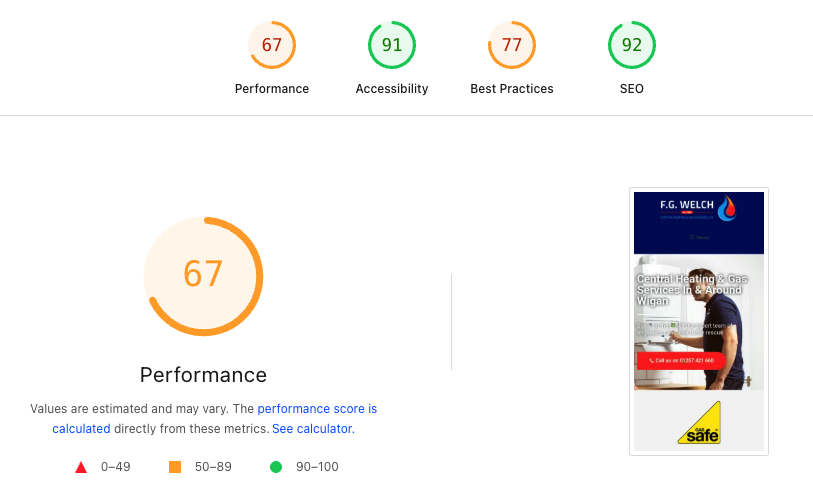
That score isn’t unusual.
I must have done over 50 website reviews last year and along with lack of CTAs and lead capture, page speed was one of the biggest issues with the majority of them.
And it matters. Google uses page speed as a ranking factor. Slow sites lose visitors before they’ve even read a word.
Maintenance - the bill that never stops
WordPress isn’t a build-it-and-forget-it platform. It needs constant attention.
Core updates. Theme updates. Plugin updates. Sometimes an update breaks something else and you’re troubleshooting, or paying someone to troubleshoot, on top of your monthly hosting fee, on top of your premium plugin renewals.
For a lot of my clients, the cost in time and money isn’t to be sniffed at.
And the painful part? They often don’t realise it until something actually breaks.
You’re at everyone else’s mercy
Here’s something people don’t think about until it bites them.
When your website is built on a specific theme and a stack of plugins, you’re depending on all those developers to keep maintaining their products.
Premium themes get abandoned.
Free plugins go paid.
The developer who built that one plugin you rely on disappears.
Suddenly you’ve got a compatibility problem and the only real fix is to pay a developer to recreate the plugin or to start again.
So what’s the alternative?
I’ve been building client websites using a completely different approach recently.
A modern static setup.
I’m not going to get too technical here because honestly you don’t need the details. What matters is what it means in practice.
No database. The site is just files. HTML, CSS, a bit of JavaScript. There’s nothing for an attacker to break into. No login page for bots to hammer. No plugin vulnerabilities to exploit.
No plugins. Everything is built clean and with purpose. No bloat. No scripts loading from seventeen different places.
Hosted on a global network. Your website is served from a server close to wherever your visitor is in the world.
It’s fast - VERY fast.
Here’s what the same client’s site looked like before and after:
Before: 
After: 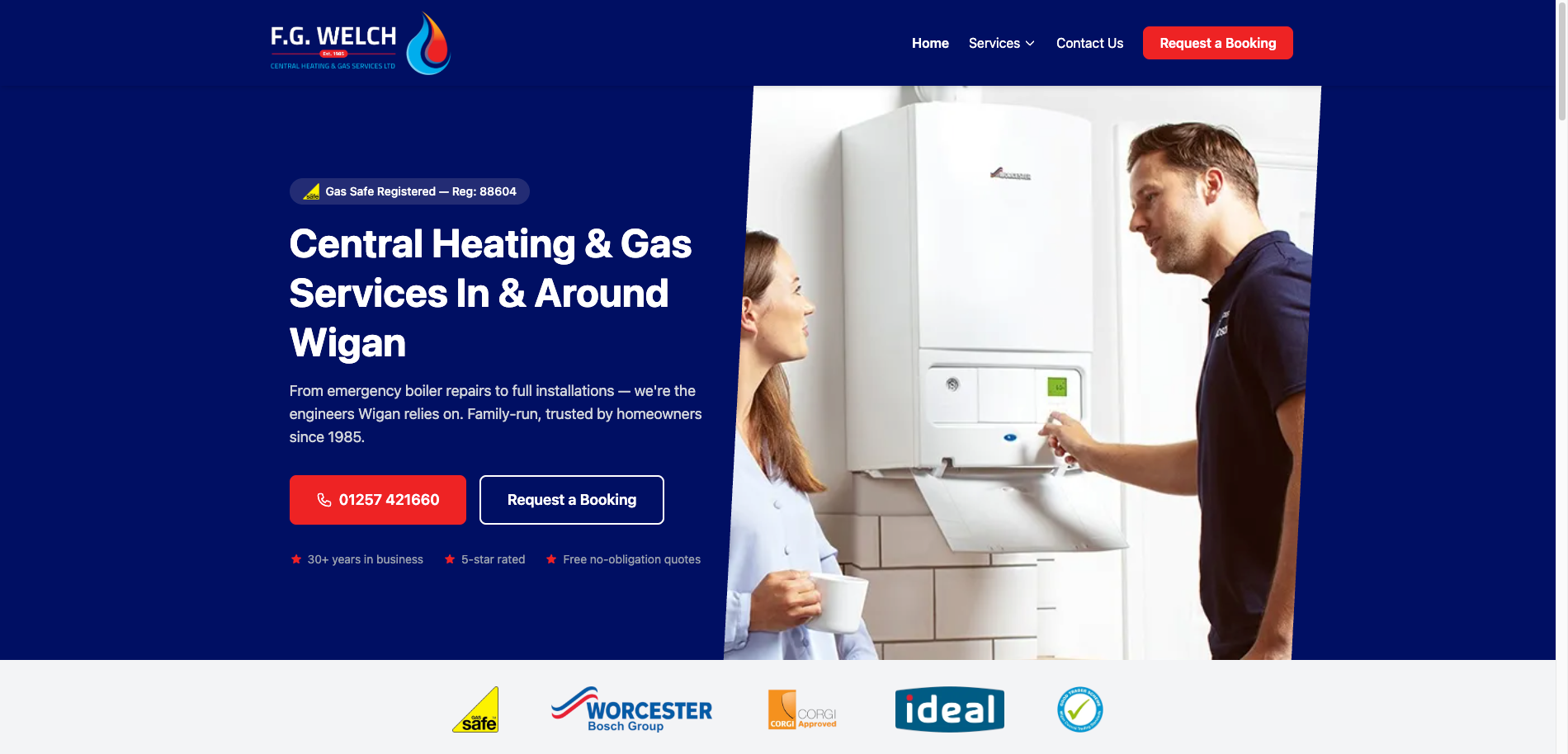
And here’s what PageSpeed says now:
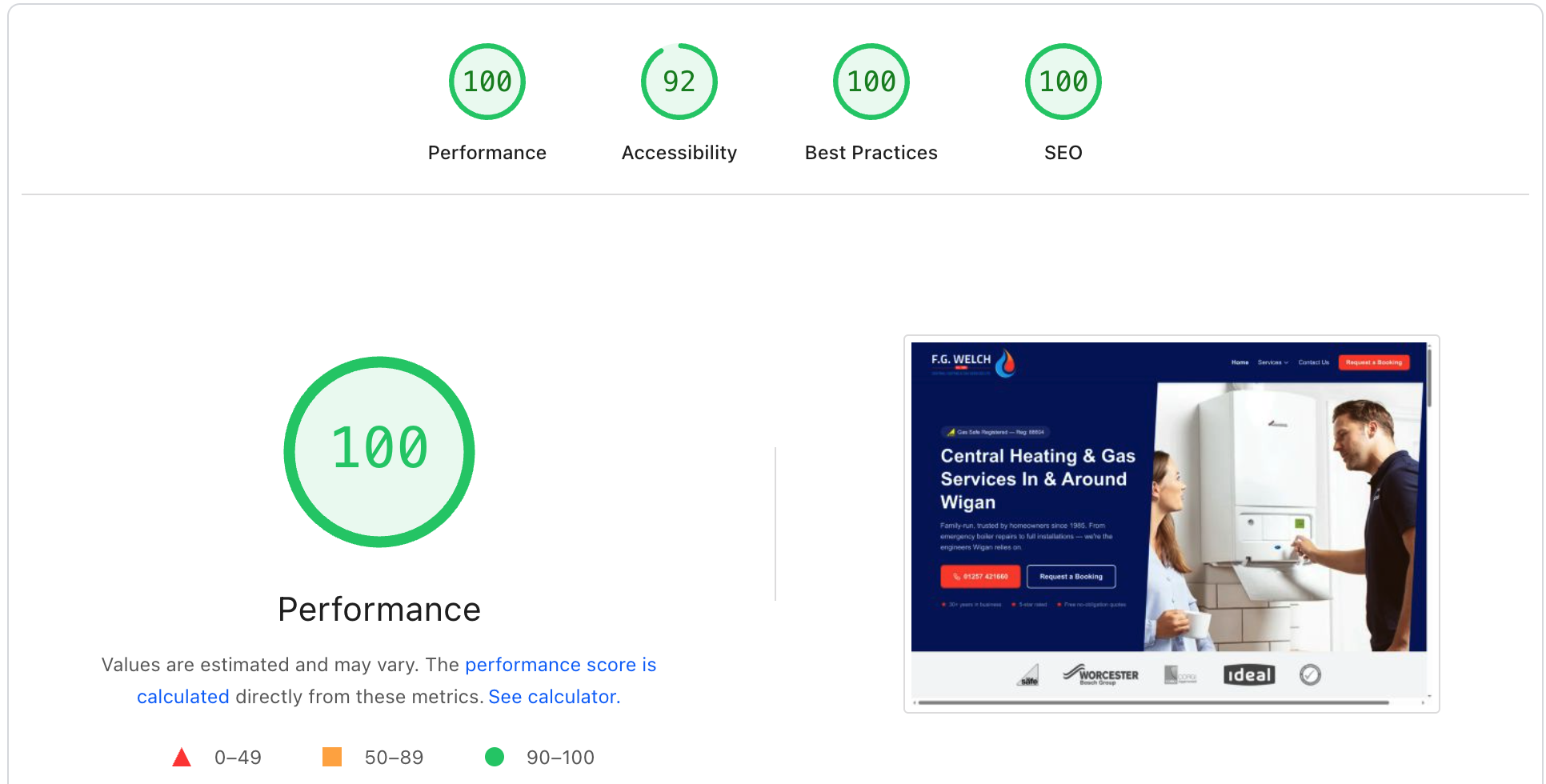
That’s not a small improvement. That’s a fundamentally different website.
The numbers
I’ll let the screenshots do most of the talking, but let me highlight what actually changed.
Speed. The before and after scores speak for themselves. Faster sites rank better, they convert better and visitors stay longer.
Google’s Core Web Vitals - the technical measures it uses to score your site - went from orange to green across the board.
Security. No database. No plugin ecosystem. No WordPress login page. No xmlrpc.php endpoint. Nothing for automated scanners to find.
DDoS protection and SSL are handled automatically by the hosting. The attack surface is dramatically reduced.
SEO. Google has been clear that page experience affects rankings. A faster, cleaner site is a better-ranking site. The HTML is lean and structured properly, not bloated with plugin-generated code. Less downtime means less disruption when Google crawls your site.
Cost. Hosting is free or near-free at this scale. No premium plugin renewals. No monthly maintenance fees. Once the site is built, it just runs.
To be fair - what WordPress still does well
I promised you honest, so here it is.
If you’re running a big publication with a team of writers who need to publish daily, WordPress’s content management system is still genuinely powerful.
If you need a full e-commerce store, WooCommerce is a mature and capable platform.
If you need non-technical staff making frequent content changes themselves, WordPress is familiar and relatively easy to use.
And if something goes wrong, there are WordPress developers everywhere. The support pool is huge.
For those use cases, WordPress still makes sense.
But most service businesses I work with? They don’t need any of that.
“But what about adding blog posts or making small changes myself?”
Fair question.
A lightweight CMS can be added on top of this setup no problem.
You get a familiar editing interface for content without dragging in all the baggage that comes with WordPress.
Best of both worlds - the speed and security of a static site with the ability to publish content when you need to.
Who is this actually for?
Honestly? Most of the service businesses I work with.
If you’re a consultant, a tradesperson, a coach, an agency, a financial adviser - your website is a marketing tool.
It needs to look credible. Load fast. Rank on Google. Convert visitors into enquiries.
You’re not publishing three articles a day. You’re not running an online shop. You need a solid, well-built site that works hard for your business and doesn’t keep landing on your to-do list.
If you’ve experienced a hacked website…
If you’re wincing at your PageSpeed score… (you can test yours here)
If you’re paying out for hosting and plugins every month and not entirely sure what you’re getting for it…
This is worth a conversation.
Where I’m taking this
This is exactly the approach behind what I’ve been building recently. Fast, modern websites for service businesses, built properly from the ground up.
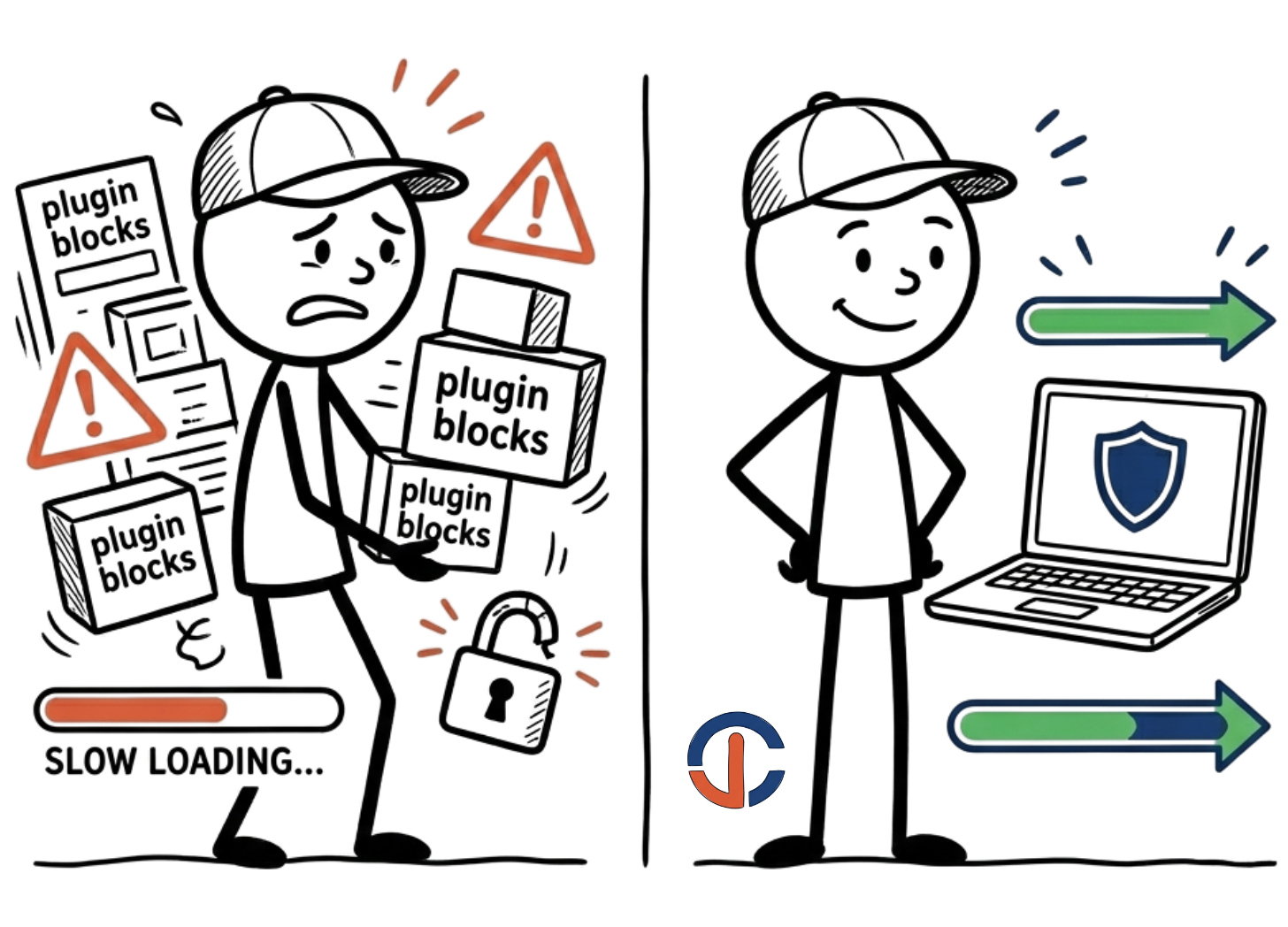
No WordPress. No ongoing vulnerability headaches. No bloated themes. Just a well-structured, fast, secure website that does its job.
If your current site is slow, out of date, or you’ve just been putting off the rebuild because you can’t face going through the WordPress process again - get in touch.
I’d genuinely be happy to take a look and give you an honest steer.
One action you can take today: Go to PageSpeed Insights, type in your website URL and see what Google actually thinks of your site. If the scores make you wince, you know where to find me.
If you want an honest review of your whole setup - website, marketing, the lot - Your Web Review is free.
I’ll go through everything and tell you what’s working, what’s not and where your quick wins are.
A note for developers and anyone who’s curious about the technical side - I’m building with Astro as the framework and deploying to Cloudflare Pages. If you want the nerdy version, drop me a message. Happy to talk through it.